A free letter every Tuesday: where I walked, where I found water and what I will carry differently next time.
Where the water is, and where it is not
No. 438 min read
Hello, walkers,
The question I am asked most is how much water to carry. The answer is that it depends where the next fountain is, so the first thing I do on any stage is find it on the map.
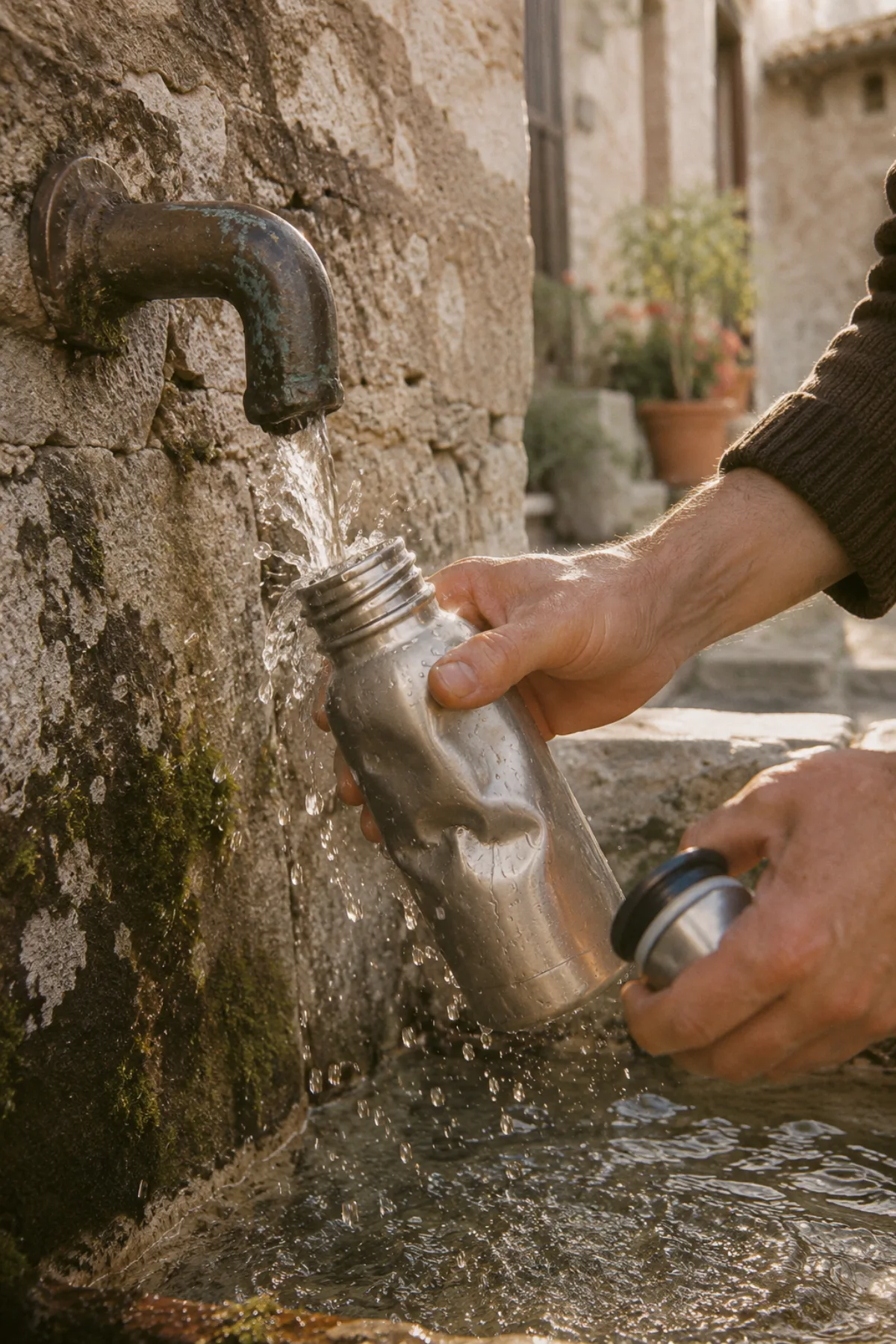
On this trail the villages have stone fountains, often at the edge of the square or beside a small mosque, and the water is cold and good.Note 11 Fountain: a stone tap or spout in a village where anyone can fill a bottle. Between the villages there can be a whole day with nothing. On the long white stages I carry three litres and drink steadily from the first hour, not when I am thirsty.
1 Fountain: a stone tap or spout in a village where anyone can fill a bottle.
I keep a short list in the lid of my pack: the name of every village, whether it has a fountain, and the hours between them.Note 22 Stage: one day’s walk between two villages, usually five to eight hours. It takes ten minutes to write, and it has saved me from more than one dry afternoon.
2 Stage: one day’s walk between two villages, usually five to eight hours.
I fill every bottle at every fountain, even when they are still half full. It takes a minute, and it is the one habit I would teach before any other.
If a fountain is dry, do not wait for it to come back.Note 33 Dry fountain: one that has no water, usually at the end of summer. Walk on to the next one, or back to the last, and drink what you have slowly. I have only done it twice, and both times the walk back was the right choice.
3 Dry fountain: one that has no water, usually at the end of summer.
Try this: next time you plan a stage, write the fountains on the sheet before you write the distance. Next week I will tell you about walking in the cold months.
Happy walking,
Elif